State-Level Restrictions Reshape Sweepstakes Casino Operations Nationwide in 2026
Freya Jenkins · May 30, 2026

State-Level Restrictions Reshape Sweepstakes Casino Operations Nationwide in 2026
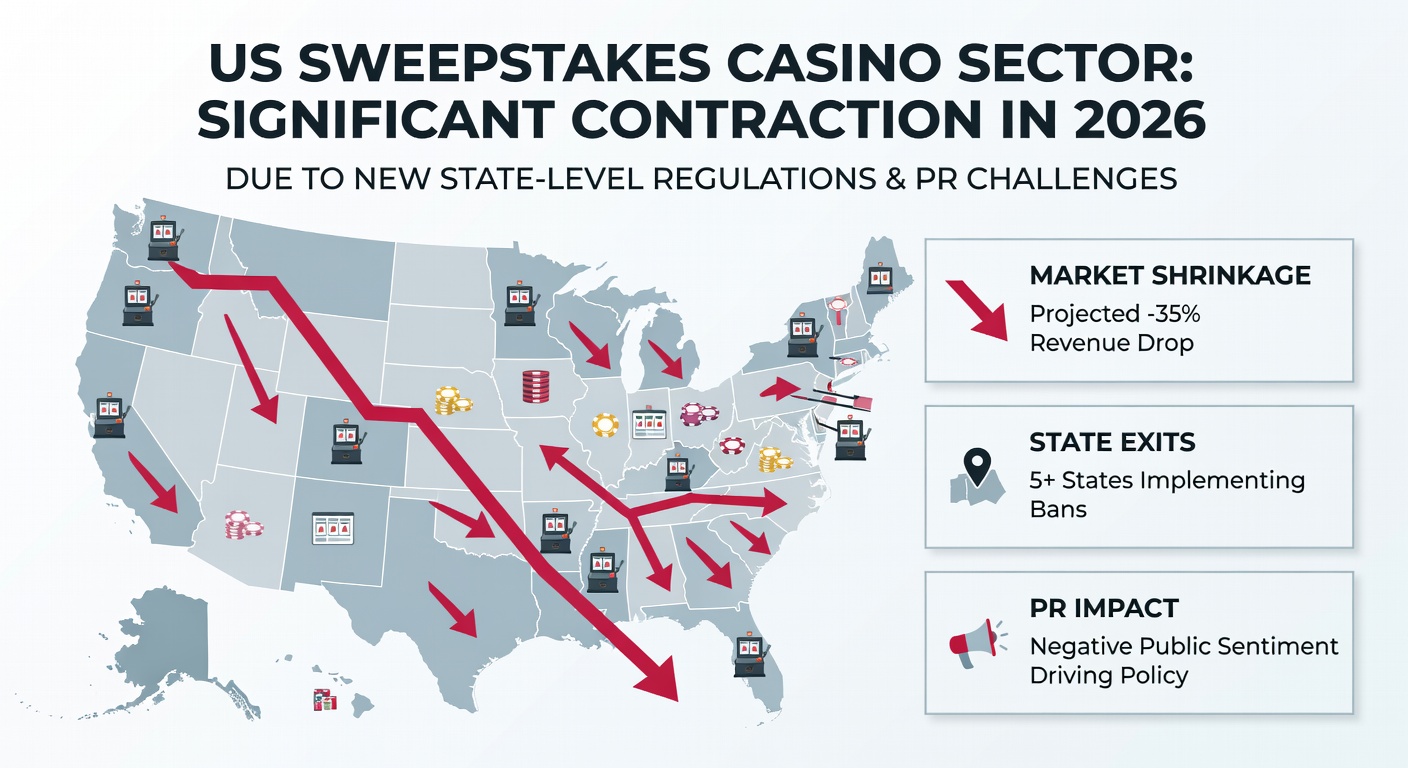
State prohibitions and enforcement measures have triggered contraction in the US sweepstakes casino sector throughout 2026, with California's Assembly Bill 831 eliminating an estimated one-fifth of national revenue after taking effect on January 1, while Indiana's House Bill 1052, signed in March 2026, imposes a ban starting July 1, and several additional states have already curtailed operations in the preceding year.
California's legislation directly targets sweepstakes casino platforms that rely on dual-currency mechanics, and data from industry tracking shows this single measure accounts for roughly 20 percent of total sector revenue across the country, forcing operators to reassess their market presence in the largest state jurisdiction. Indiana's House Bill 1052 builds on similar restrictions by establishing clear prohibitions that become active mid-year, creating a timeline where operators must complete compliance adjustments before the July deadline arrives.
Broader Pattern of State Actions in 2025 and 2026
Maine, New York, Connecticut, Mississippi, Louisiana, Montana, and Nevada implemented restrictions or outright bans during 2025, establishing a cumulative effect that has reduced available markets well before the 2026 measures took hold, and these earlier actions set the stage for accelerated exits once California and Indiana followed suit. Observers tracking regulatory filings note that the combined impact has prompted multiple operators to withdraw from affected jurisdictions rather than attempt costly legal challenges or product overhauls in each location separately.
By May 2026 the pattern of state-level enforcement continues to unfold, with remaining platforms navigating litigation risks and payment processing hurdles that have grown more complex as additional attorneys general pursue compliance actions, yet operators have begun documenting shifts in user acquisition strategies to maintain revenue streams in permitted states.
Operator Responses and Market Adjustments
Virtual Gaming Worlds, the parent company behind Chumba Casino, LuckyLand Slots, and Global Poker, has initiated exits from restricted states while introducing new brands such as Just Slots that operate without dual-coin mechanics, allowing continued presence in markets where traditional sweepstakes models face prohibition. These adjustments reflect coordinated efforts to realign product offerings around single-currency systems and revised payment flows that comply with emerging rules on prize structures and user verification.
Additional strategy changes at major operators include enhanced responsible play features and updated product models designed to address litigation concerns, with companies reallocating resources toward states that have not yet enacted bans and exploring alternative monetization approaches that avoid sweepstakes elements altogether. Industry reports indicate that such pivots have helped some platforms stabilize user bases in the remaining open jurisdictions even as overall national revenue contracts.
Regulatory and Litigation Pressures Driving Change
Enforcement actions across multiple states have intensified scrutiny on sweepstakes casino payment processors and marketing practices, prompting operators to document compliance programs that satisfy both existing statutes and anticipated court rulings. Legal proceedings in several jurisdictions continue to test the boundaries of what constitutes permissible sweepstakes activity versus prohibited gambling operations, and companies have responded by modifying terms of service and user interfaces in advance of final judgments.
According to filings tracked by state regulatory bodies, platforms exiting California and preparing for Indiana's July 1 implementation have also revised their responsible gaming protocols to include stricter age verification and spending limit tools, measures that align with broader industry standards applied by gaming control boards in states such as New Jersey and Pennsylvania. These adaptations demonstrate how operators integrate requirements from multiple regulatory frameworks into unified operational changes.
Conclusion
The sequence of state prohibitions that began in 2025 and accelerated with California's January 1, 2026 effective date alongside Indiana's upcoming July ban has produced measurable contraction in the sweepstakes casino sector, with operators like Virtual Gaming Worlds responding through market exits, new brand launches without dual-coin features, and targeted adjustments to payments, responsible play tools, and product designs. As of May 2026 these developments continue to reshape available markets while litigation and enforcement remain active across jurisdictions that acted earlier, establishing a regulatory environment where compliance strategies must evolve in tandem with ongoing legislative activity.